


Stop Trying to Feel Better Tonight
Some nights aren’t meant to be fixed. Gloria Travers delivers a powerful modern folk performance about acceptance, emotional rest, and…

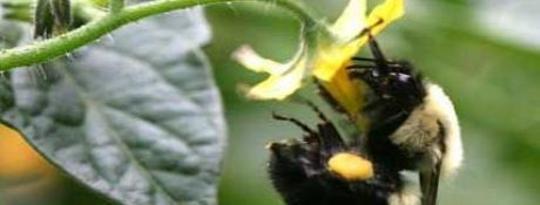
Stand at the front door of any big supermarket and play a little game. Count the aisles of boxes and bags, then try to find the small strip of real food that depends on insects. If bees and their wild cousins keep fading, that strip shrinks and prices rise. This is not just about pretty butterflies. It is about dinner, health, and who gets left out when the bill comes due.
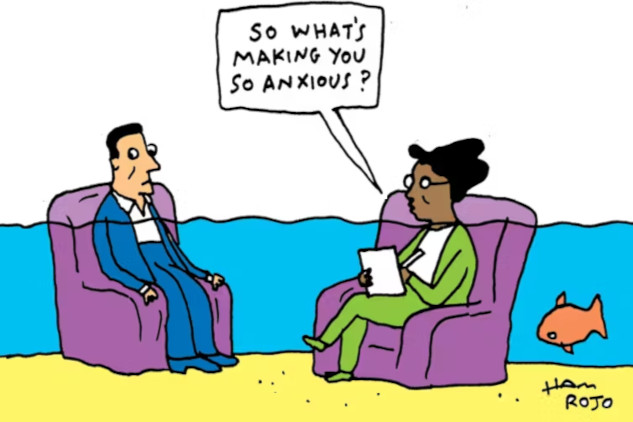
Eco-anxiety, a growing concern tied to climate change, is affecting people globally. This article explores the intersection of eco-anxiety, mental health, and how we can cope in a world increasingly affected by environmental crises. Communities most impacted by climate chaos, from Asia to the Americas, report distress ranging from grief to hopelessness. With six planetary boundaries crossed, the connection between climate and mental health is critical to understand for future action.

What is a heat dome?A meteorologist explains the weather phenomenon baking the northeast quarter of the US

Autumn has finally arrived in the UK following an unusually sunny September. The days are growing shorter, the temperature cooler, and the leaves are changing colour.

Climate change has emerged as one of the most pressing challenges of our time, bringing with it a cascade of consequences, including extreme weather events that wreak havoc on communities and infrastructure.

As Maui's fires raged on, fueled by a combination of drought, intense winds, and climate shifts, the reality of our times became inescapably clear: we are living the climate crisis.

In 2021, the United States witnessed the impact of natural hazards on nearly one in 10 homes. As climate change continues to shape our environment, it becomes imperative to identify the riskiest regions in the country.

The world faces an unprecedented climate crisis as temperatures soar and heat records are shattered across the globe.

Have you ever heard of the Atlantic Meridional Overturning Circulation or AMOC? Don't worry if you haven't! It's not a daily discussion topic, but it's an integral part of our planet that scientists watch closely.

Global warming is a pressing issue that poses severe threats to our planet and all its inhabitants. In recent years, scientists have warned about the potential consequences of reaching a 3°C increase in global temperatures.

We are facing a much different fire regime in a hotter, drier world. In the western U.S., the area burned by wildfires has doubled since the mid-1980s compared to natural levels.

Waterfront homes are selling within days of going on the market, and the same story is playing out all along the South Florida coast at a time when scientificreportsare warning about the rising risks of coastal flooding as the planet warms.

Brace yourselves, allergy sufferers – new research shows pollen season is going to get a lot longer and more intense with climate change.

This isn’t the first time that Britain has experienced drastic climate change, however. By the 16th and 17th centuries, northern Europe had left its medieval warm period and was languishing in what is sometimes called the little ice age.

Coral reefs have long been regarded as one of the earliest and most significant ecological casualties of global warming.

More people are going to hospital, compared with 20 years ago. It turns out, that’s not the only surprise in this new report. Here’s how else climate change is affecting health in Britain.
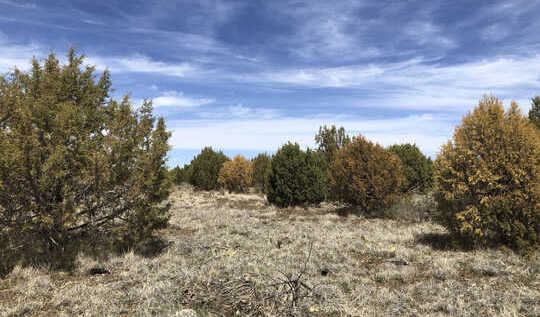
Like humans, trees need water to survive on hot, dry days, and they can survive for only short times under extreme heat and dry conditions.

New research clarifies how hot nights are curbing crop yields for rice.

Summer is upon us and things are heating up, literally. That’s worrisome given the effect that heat has on human health, both on the body and the mind.

Just about every indicator of drought is flashing red across the western U.S. after a dry winter and warm early spring. The snowpack is at less than half of normal in much of the region.

It is really hard to know how a species is doing by just looking out from your local coast, or dipping underwater on scuba

Ask people to name the world’s largest river, and most will probably guess that it’s the Amazon, the Nile or the Mississippi. In fact, some of Earth’s largest rivers are in the sky – and they can produce powerful storms, like the one now soaking California.

The year 2020 will no doubt go down in history for other reasons, but it is also on target to be one of the warmest on record. And as the climate warms, natural hazards will happen more frequently – and be ever more lethal.