


Stop Trying to Feel Better Tonight
Some nights aren’t meant to be fixed. Gloria Travers delivers a powerful modern folk performance about acceptance, emotional rest, and…


The legend of King Arthur and the Camelot vision has echoed through centuries, offering us more than knights and battles. Within the myth lies a timeless story of justice, loyalty, and renewal. From the Round Table’s promise of equality to Camelot’s fall from grace, the lessons remain urgent. In rediscovering King Arthur, we glimpse our own search for leadership, integrity, and the possibility of a better tomorrow.

What does it really take to feel happy? The answer isn’t just about money, it’s about the inequality around you. In unequal societies, the amount of income needed to feel “enough” keeps rising. This article looks at how income happiness is shaped by inequality happiness, why comparisons matter, and what this means for our well-being and the society we build together.

Insurance shrinkflation is the hidden crisis of 2025. As premiums climb, many policies now cover less while charging more. Like food product shrinkage, insurers quietly reduce coverage or raise deductibles without lowering prices. This means families are paying higher premiums for weaker protection. Understanding insurance shrinkflation is essential for protecting your financial security and making smart, empowered decisions about coverage.
 Black women jobs in the federal workforce are disappearing at alarming rates, stripping away hard-won pathways to stability. As Trump’s cuts target agencies with high Black women representation, families lose security, benefits, and income. This is more than statistics, it’s a structural crisis that undermines the entire economy. When Black women lose jobs, America loses a cornerstone of its workforce and its future.

The racial wealth gap in America is no accident, it’s a legacy of policies, practices, and attitudes stretching back generations. While the headlines focus on surface-level solutions, the real roots run deeper. Understanding racial wealth and its entrenched history is the first step to building a truly fair and inclusive economy.

AI-powered personalized pricing is changing how businesses charge you—sometimes charging more just because they can. This profit-maximizing strategy thrives on your digital footprint. But there’s one simple, powerful weapon you still hold: cash. In this article, learn how your spending data is used against you and how paying with paper money can protect you in the algorithmic age.

Corporate control through monopolies like Big Ag, Big Pharma, and Big Tech has a firm grip on America. This article uncovers how these giants stifle competition, manipulate politics, and harm everyday Americans, particularly in rural areas. Discover how the Biden administration is pushing back and what steps can be taken to restore economic democracy. It’s time to reclaim power from these monopolistic corporations.
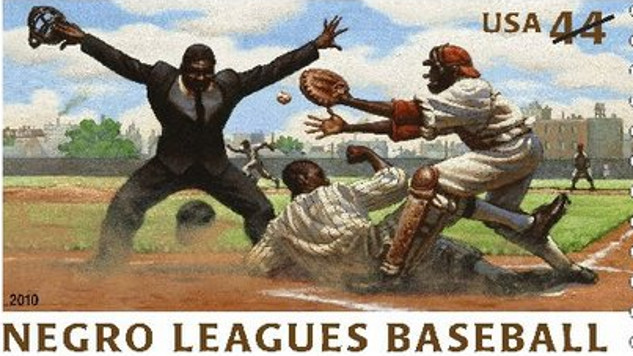
Baseball, often dubbed America's pastime, carries a rich and diverse history that has shaped the nation's identity.
 How marginalized groups are working to counteract historical wealth inequality.
 Buying ethically sourced products is not as straightforward as it might seem, according to the first large-scale analysis of sustainable sourcing practices.
 The big, rarely asked question about our current economy is who gets the benefits of common wealth? Common wealth has several components. One consists of gifts of nature we inherit together: our atmosphere and oceans, watersheds and wetlands, forests and fertile plains, and so on (including, of course, fossil fuels).
 When top-level managers find governance mechanisms too coercive, they’re more likely to commit fraud, according to a new paper.
 We can refuse to accept the pervasive, but false, claims that money is wealth and a growing GDP improves the lives of all.
 One of Bernie Sanders’s most important proposals didn’t receive enough attention and should become a law even without a president Sanders. Hillary Clinton should adopt it for her campaign.
 There would be no Cesar Chavez without the Filipino manongs of Delano, California, whose decision to strike set off the most significant labor movement the United States has ever seen.
 Cities and states fork over an estimated $70 billion each year to large companies that don’t need public assistance to thrive. We could spend that money on our own neighborhoods.
 Marissa Mayer tells us a lot about why Americans are so angry, and why anti-establishment fury has become the biggest single force in American politics today.
 Wealth inequality is even more of a problem than income inequality. That’s because you have to have enough savings from income to begin to accumulate wealth – buying a house or investing in stocks and bonds, or saving up to send a child to college.
 In an election year, we hear endless promises of what our politicians will do to help the people. But are the ideas we’re hearing from Bernie Sanders and others—like Medicare for all, free college tuition, paid family leave—just slogans to pander to voters suffering under stagnating wages and burdensome debt? Could those ideas ever actually take hold?
 The tax dealings of a number of politicians have come under scrutiny this week, following news of their offshore holdings in the Panama Papers. The leaks have led to the resignation of the Icelandic prime minister – and the UK prime minister, David Cameron, has been criticised for shares he used to have in an offshore fund set up
 Low-wage workers nationwide have been campaigning for a $15 hourly "living wage" and the right to organize without employer labor law-breaking. But a new think tank report says that in most states, $15 is not enough - even for one person.
 I’ve had so many calls about an article appearing earlier this week in the Wall Street Journal – charging that Bernie Sanders’s proposals would carry a “price tag” of $18 trillion over a 10-year period – that it’s necessary to respond.
 EU’s economic demands seek to derail small business and local communities, paving the way for multinational corporate giants. One demand is that Greece abolish any laws restricting the days or hours a business can operate despite the fact that several European countries including have enacted such policies to protect workers and small business, including Germany.