


Unleashing Hidden Talents for Personal Fulfillment
Everyone possesses unique talents meant to be shared with the world. The stories of Walt Disney and Cesar Millan illustrate how embracing…


We've all experienced sweltering summer days that make us want to seek refuge in the air conditioning.

A heat dome occurs when a persistent region of high pressure traps heat over an area. The heat dome can stretch over several states and linger for days to weeks, leaving the people, crops and animals below to suffer through stagnant, hot air that can feel like an oven.

To comprehend El Niño, we must first acknowledge its counterpart, La Niña, and their intricate relationship as part of the El Niño Southern Oscillation (ENSO) system.

Every two to seven years, the equatorial Pacific Ocean gets up to 3°C warmer (what we know as an El Niño event) or colder (La Niña) than usual, triggering a cascade of effects felt around the world.
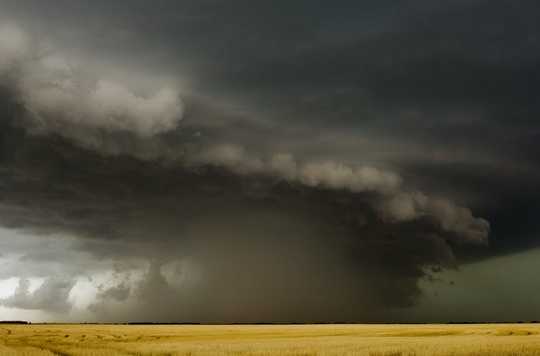
The U.S. recently has experienced two rarer events: organized lines of thunderstorms with widespread damaging winds, known as derechos.

John Oliver discusses the tension between the public and private worlds of predicting the weather.

The official Atlantic hurricane season begins on June 1, even as many communities are still recovering from a destructive year in 2018.

During the 2017 disaster season, three severe hurricanes devastated large parts of the U.S.

Natural disasters have filled our news in recent weeks. They wreak havoc in poor and vulnerable communities and cost billions in recovery and aid funding.
 After an unusually intense heat wave, downpour, or drought, Noah Diffenbaugh and his research group inevitably get phone calls and emails asking whether human-caused climate change played a role.
 Sea level changes in the Pacific Ocean let scientists estimate future global average surface temperatures, a new report shows.
 This past July was the hottest single month in Earth’s recorded history, but warming isn’t the only danger climate change holds in store.
 Scientists say recent work to unravel the mysteries of the Atlantic jet stream could pay off with better long-term forecasts of summer weather.
 The 2015-16 El Niño has likely reached its end. Tropical Pacific Ocean temperatures, trade winds, cloud and pressure patterns have all dropped back to near normal, although clearly the event’s impacts around the globe are still being felt.
 Drought has spread in several provinces of Mindanao Island. Photo from the Facebook page of RMP-NMR Rising temperatures and water shortages are affecting many countries in Southeast Asia, thanks to the El Niño climate phenomenon.
 Analysis of air samples shows that the cleansing effect of heavy rainfall is diminished by organic particles spattering up into the atmosphere from the soil.
 The world’s climate is already changing. Extreme weather events (floods, droughts, and heatwaves) are increasing as global temperatures rise. While we are starting to learn how these changes will affect
 Midwestern farmers usually fare well during years that El Niño weather patterns affect the growing season.
 This is the year of obscure atmospheric phenomenon. The polar vortex chilled everyone’s winter. Methane releases might be carving mysterious craters in the Arctic ice. And blocking patterns got the blame for Colorado’s so-called thousand-year flood.

A new study shows that there is at least a 76 percent likelihood that an El Niño event will occur later this year, potentially reshaping global weather patterns for a year or more and raising the odds that 2015 will set a record for the warmest year since instrument records began in the late 19th century.